
ES.
En la morfología natural, la estructura de un eje o raquis principal del que divergen ramificaciones secundarias —barbas o pinnas— responde a un patrón de diseño biológico de notable eficiencia. Este modelo fractal u organográfico se replica a través de diferentes reinos y escalas con el fin de optimizar procesos vitales como la captura de luz, la absorción de nutrientes, el vuelo o la dispersión. Desde una perspectiva física, dicha arquitectura resulta fascinante al manifestar un equilibrio preciso entre flexibilidad y resistencia: mientras el eje central dota de firmeza y verticalidad al organismo, las ramificaciones laterales fragmentan la resistencia de las corrientes de viento o agua, previniendo la ruptura estructural y multiplicando exponencialmente la superficie de contacto con el entorno.
El acercamiento a este proyecto artístico e investigativo brota, inicialmente, de un interés sistemático por descifrar la lógica interna de estas estructuras; sin embargo, la búsqueda trasciende lo estrictamente morfológico para situarse en una dimensión geopolítica, climática y afectiva. La investigación toma como primer eje de estudio a la palmera, reconociéndola como un elemento fundacional en el imaginario colectivo del Caribe colombiano y como un símbolo profundamente ligado a la alteridad térmica de la costa. No obstante, este análisis geográfico y botánico expande sus fronteras al trascender hacia el interior del país, localizando el mismo patrón estructural en la palma de cera de la región central. Al conectar ambas geografías, la pieza orgánica se convierte en un vehículo de identidad territorial cruzada: un diálogo visual entre el litoral y la cordillera que interroga cómo una misma matriz geométrica moldea la memoria colectiva, la construcción cultural del paisaje y las diversas nociones de arraigo dentro del territorio nacional.
Más allá de las fronteras botánicas de las palmáceas, la investigación ha expandido orgánicamente sus límites hacia otros escenarios de la naturaleza. Por un lado, se adentra en el estudio de los helechos, rastreando la delicadeza estructural de sus frondas y su vinculación con ecosistemas húmedos y de sotobosque. Por otro lado, el proyecto cruza la frontera interespecies hacia el reino animal mediante la exploración analítica de las plumas. Al incorporar estos nuevos elementos, la indagación se desvincula de un espécimen particular para consolidarse como un estudio comparativo y transdisciplinar. Así, el raquis y las barbas dejan de ser meros componentes anatómicos aislados para transformarse en un sistema de archivo visual que evidencia hilos conductores invisibles pero universales entre la flora, la fauna y el territorio.
EN.
In natural morphology, the structure of a main axis or rachis from which secondary branches—barbs or pinnae—diverge responds to a remarkably efficient biological design pattern. This fractal or organographic model is replicated across different kingdoms and scales to optimize vital processes such as light capture, nutrient absorption, flight, or seed dispersal. From a physical perspective, this architecture is fascinating because it manifests a precise balance between flexibility and resistance: while the central axis provides the organism with firmness and verticality, the lateral branches break the resistance of wind or water currents, preventing structural failure and exponentially multiplying the surface area in contact with the environment.
The approach to this artistic and research project stems, initially, from a systematic interest in deciphering the internal logic of these structures; however, the pursuit transcends the strictly morphological to position itself within a geopolitical, climatic, and affective dimension. The investigation takes the palm tree as its primary axis of study, recognizing it not only as a botanical specimen but as a foundational element in the collective imaginary of the Colombian Caribbean and a symbol deeply linked to the thermal alterity of the coast. Nonetheless, this geographic and botanical analysis expands its frontiers by moving toward the interior of the country, locating the same structural pattern in the wax palm of the central Andean region. By connecting both geographies, the organic piece becomes a vehicle for crossed territorial identity: a visual dialogue between the coastline and the mountain range that interrogates how the same geometric matrix shapes collective memory, the cultural construction of the landscape, and diverse notions of belonging within the national territory.
Beyond the botanical borders of the Arecaceae family, the research has organically expanded its limits toward other natural scenarios. On one hand, it delves into the study of ferns, tracing the structural delicacy of their fronds and their connection to humid understory ecosystems. On the other hand, the project crosses the interspecies boundary into the animal kingdom through the analytical exploration of feathers. By incorporating these new elements, the inquiry detaches itself from any single specific specimen to establish itself as a comparative and transdisciplinary study. Thus, the rachis and the barbs cease to be mere isolated anatomical components and are transformed into a visual archive system that reveals invisible yet universal threads connecting flora, fauna, and territory.
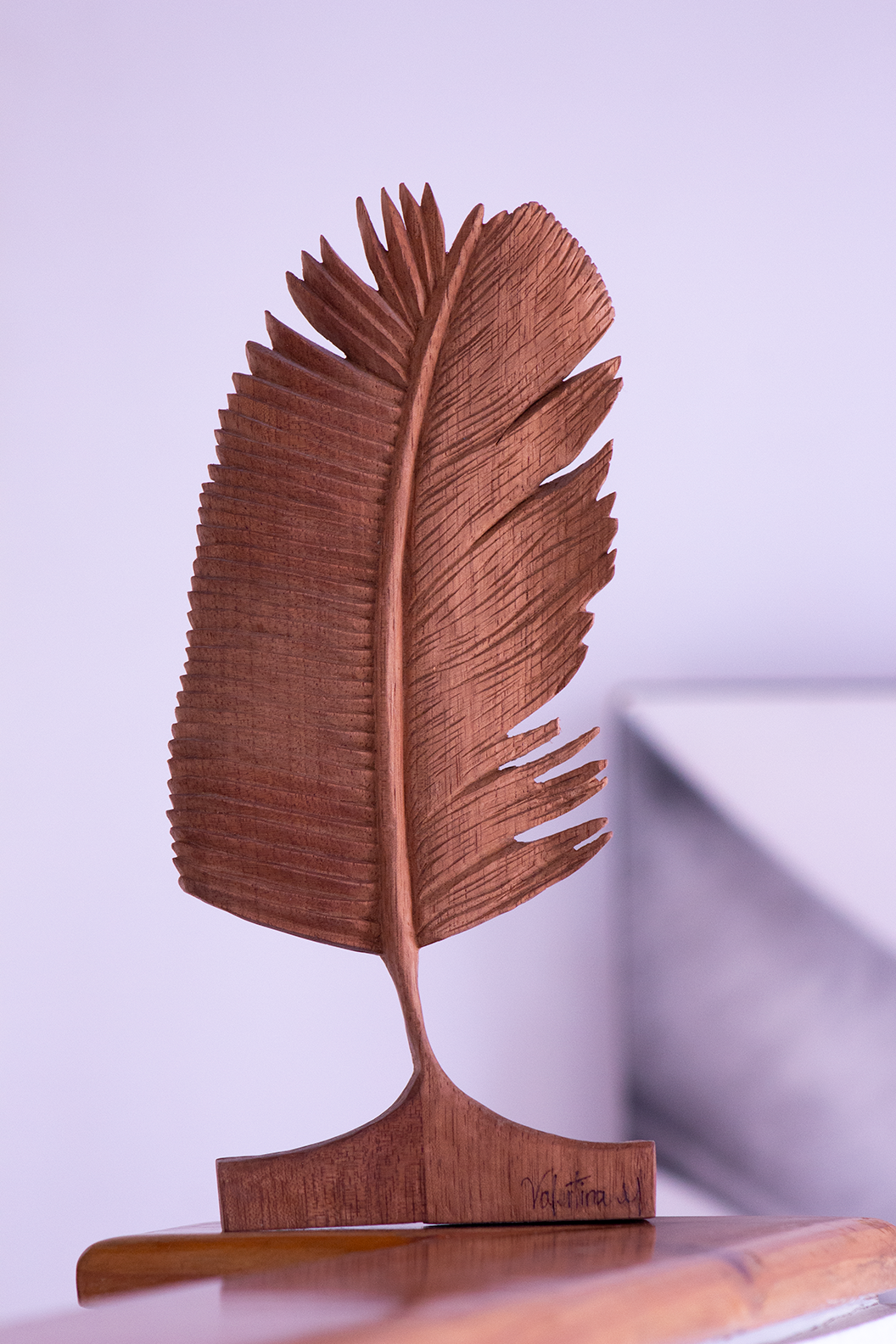
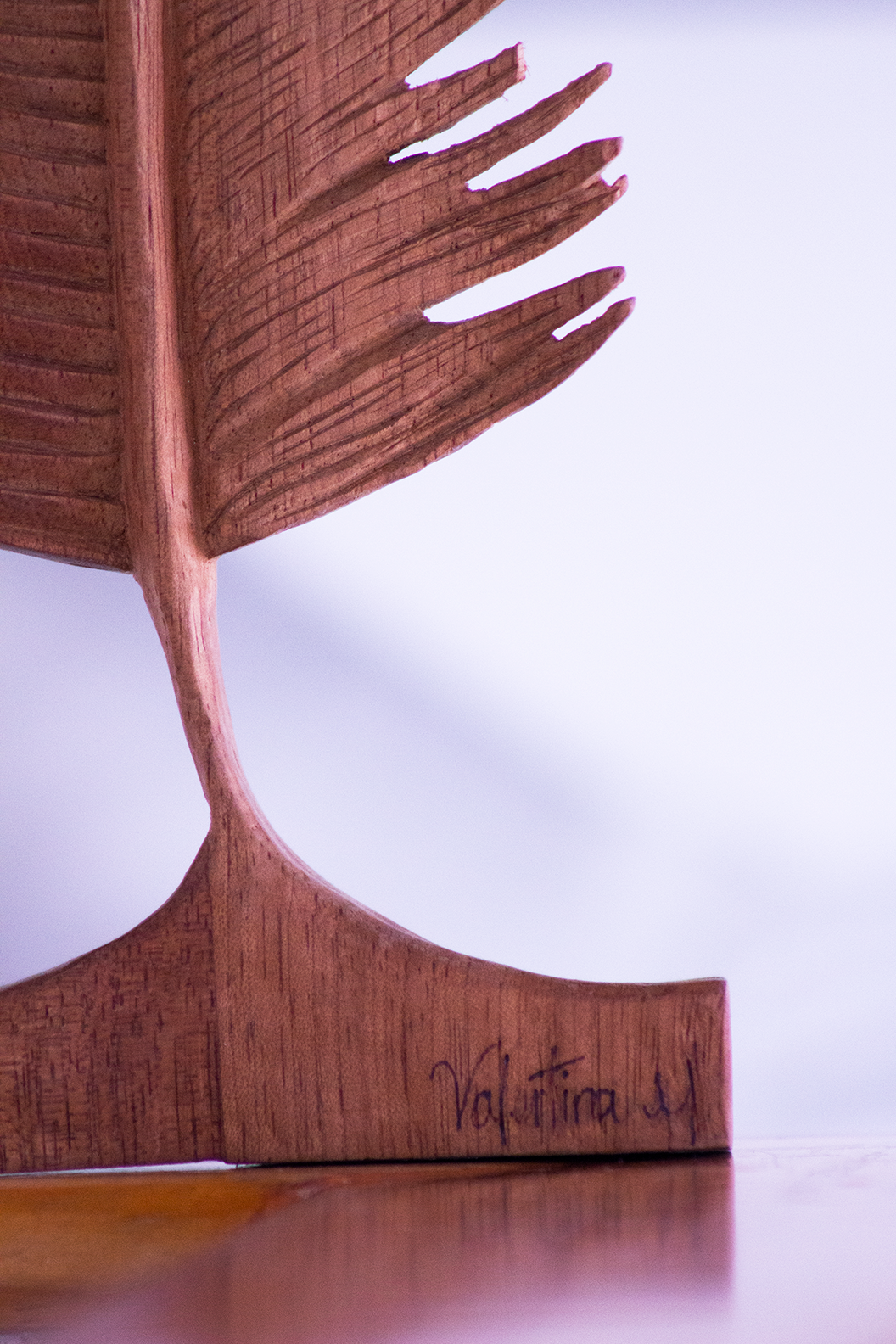
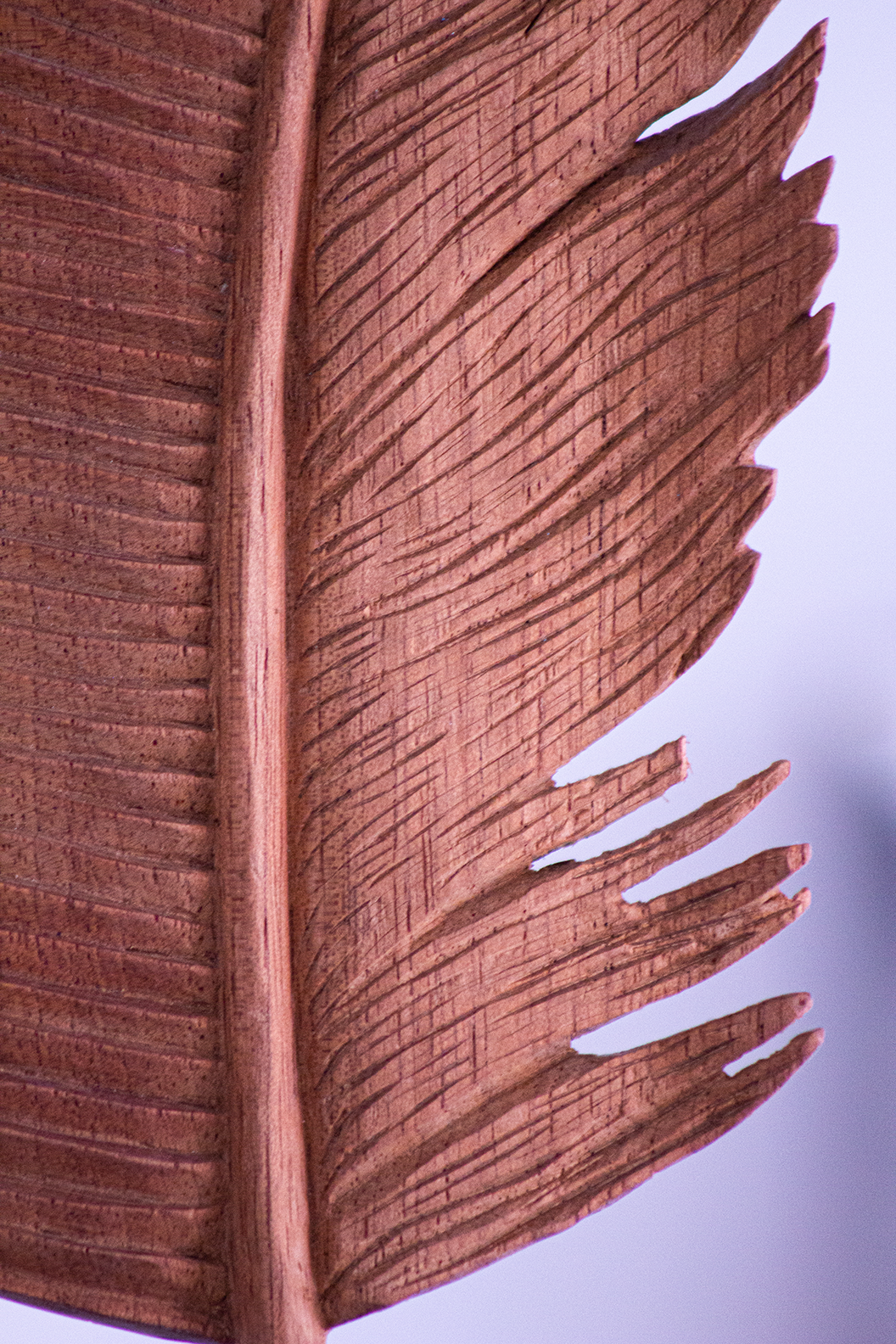
Main Raquis, 2015. Escultura tallada en madera de Cedro Amargo (Cedrela odorata)| Carved sculpture in Cedar wood (Cedrela odorata)
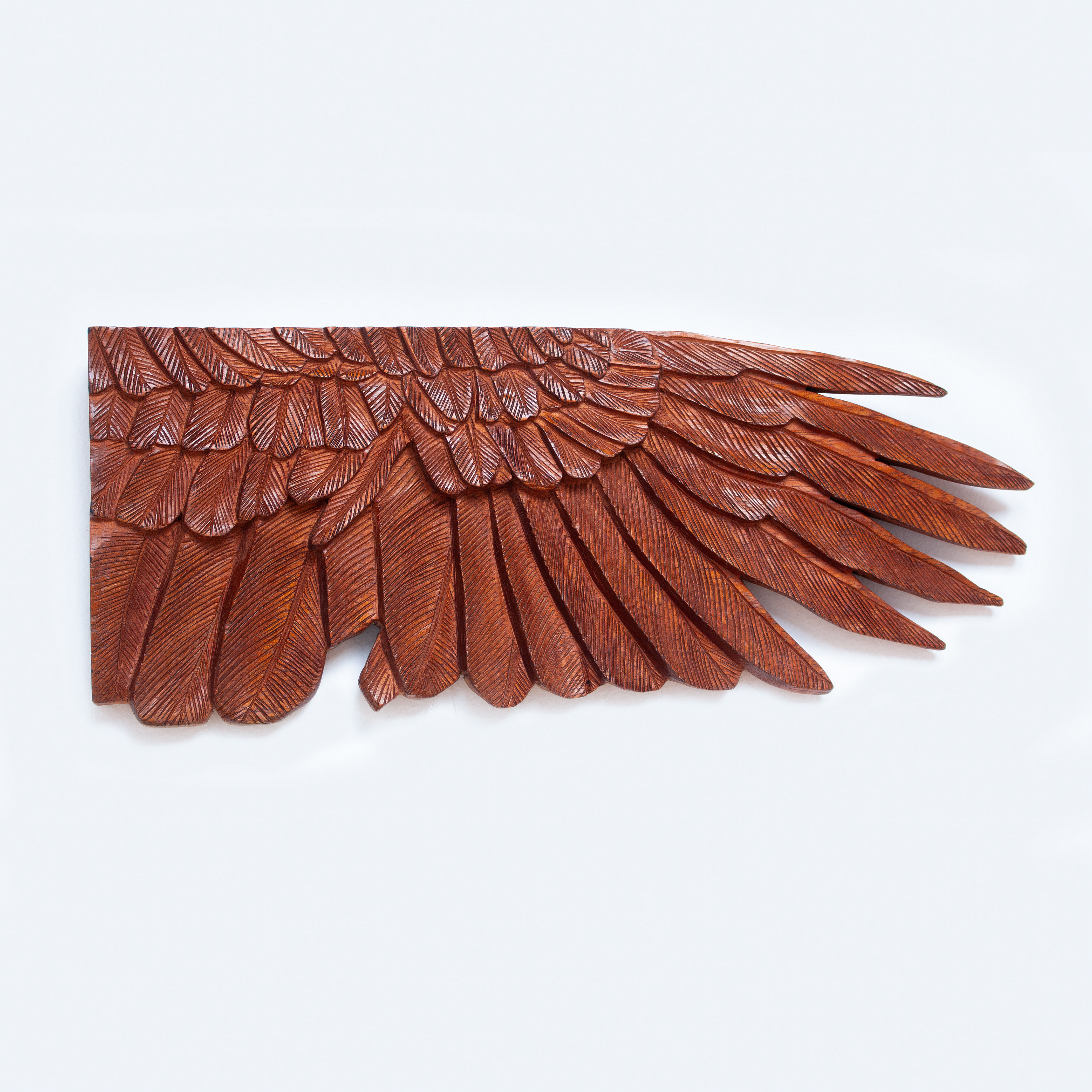
Estudio de ala de águila, 2015
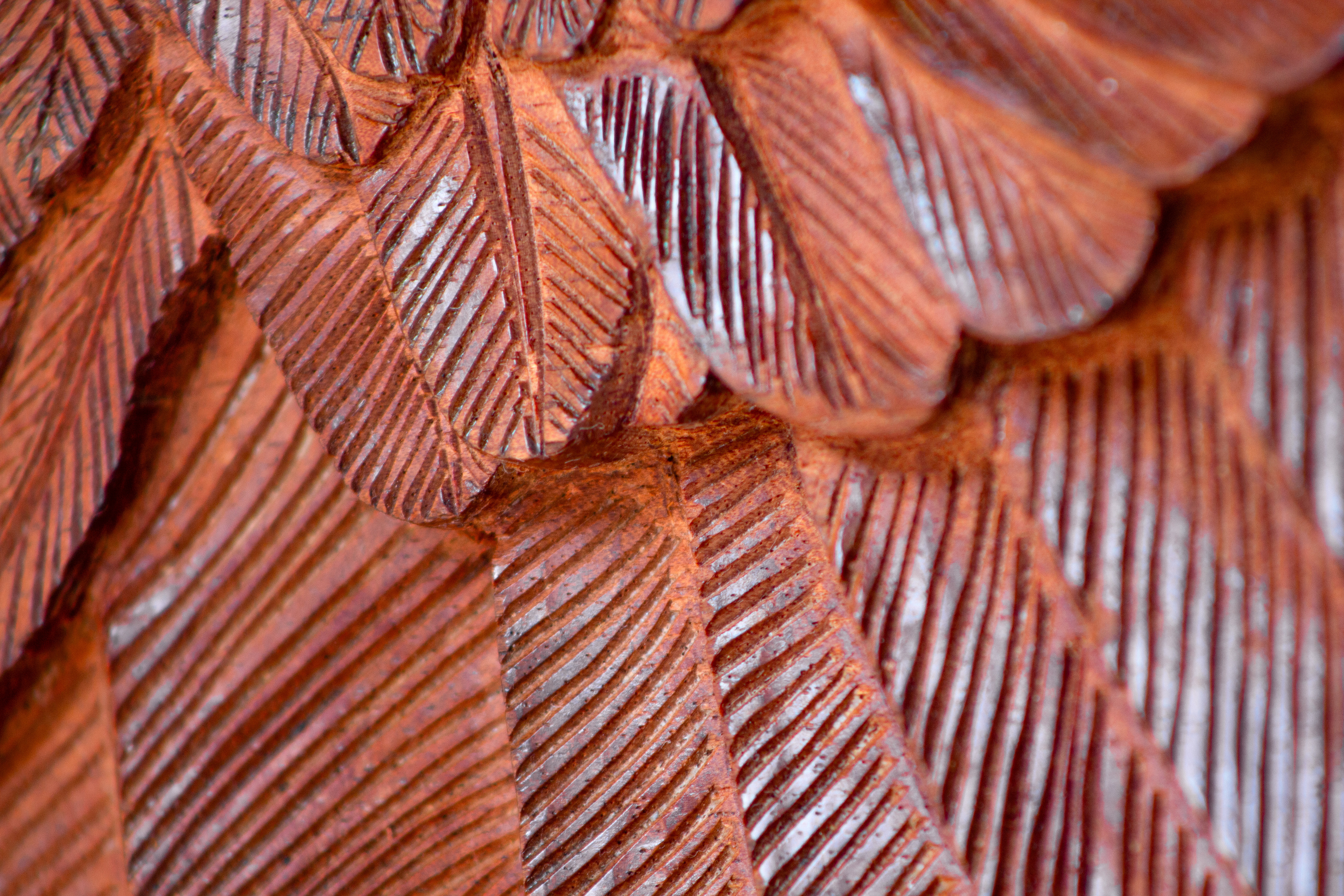
Detalle | Detail
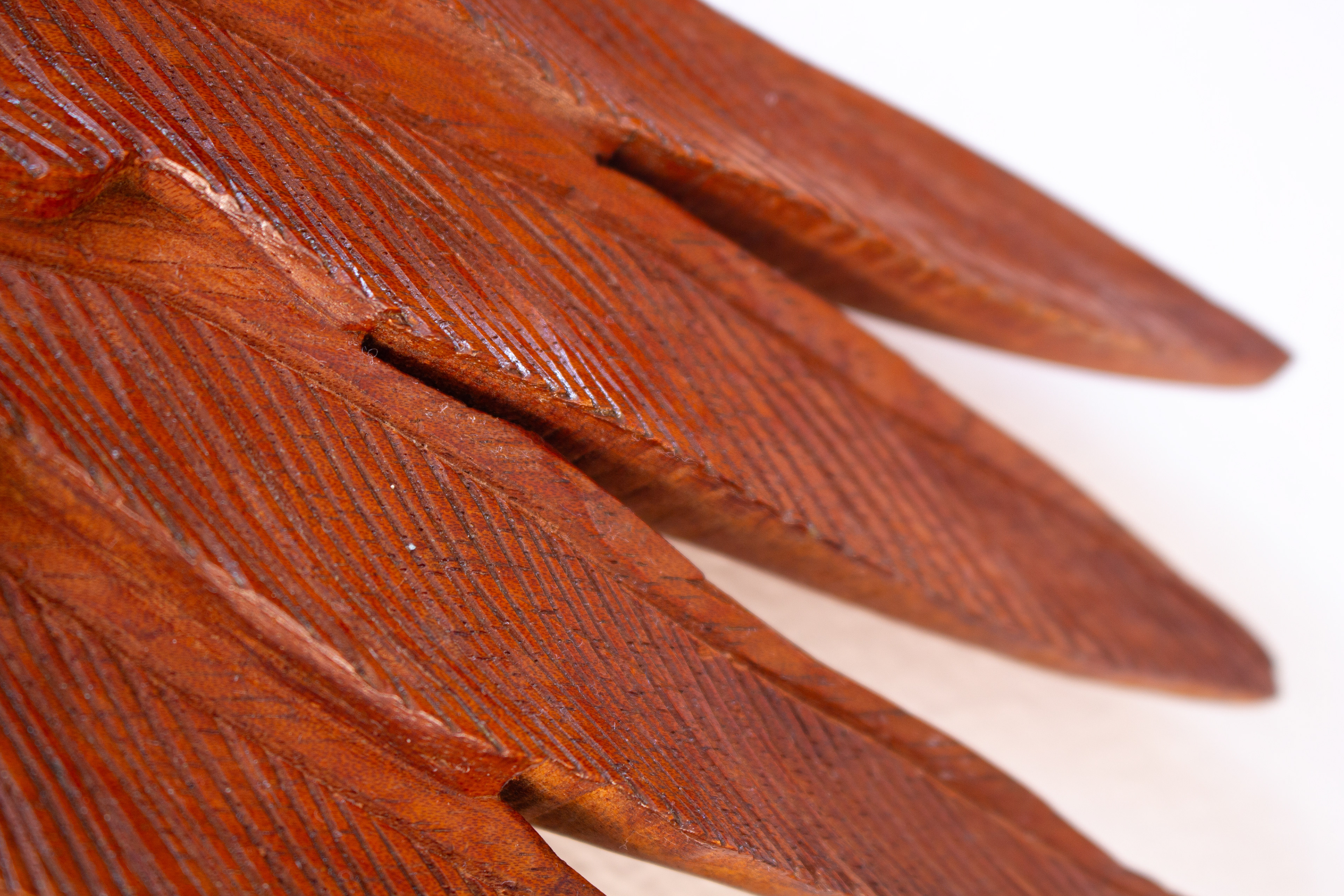
Detalle | Detail
Estudio de ala de águila, 2015. Escultura tallada en madera de Cedro Amargo (Cedrela odorata) | Carved sculpture in wood (Cedrela odorata)
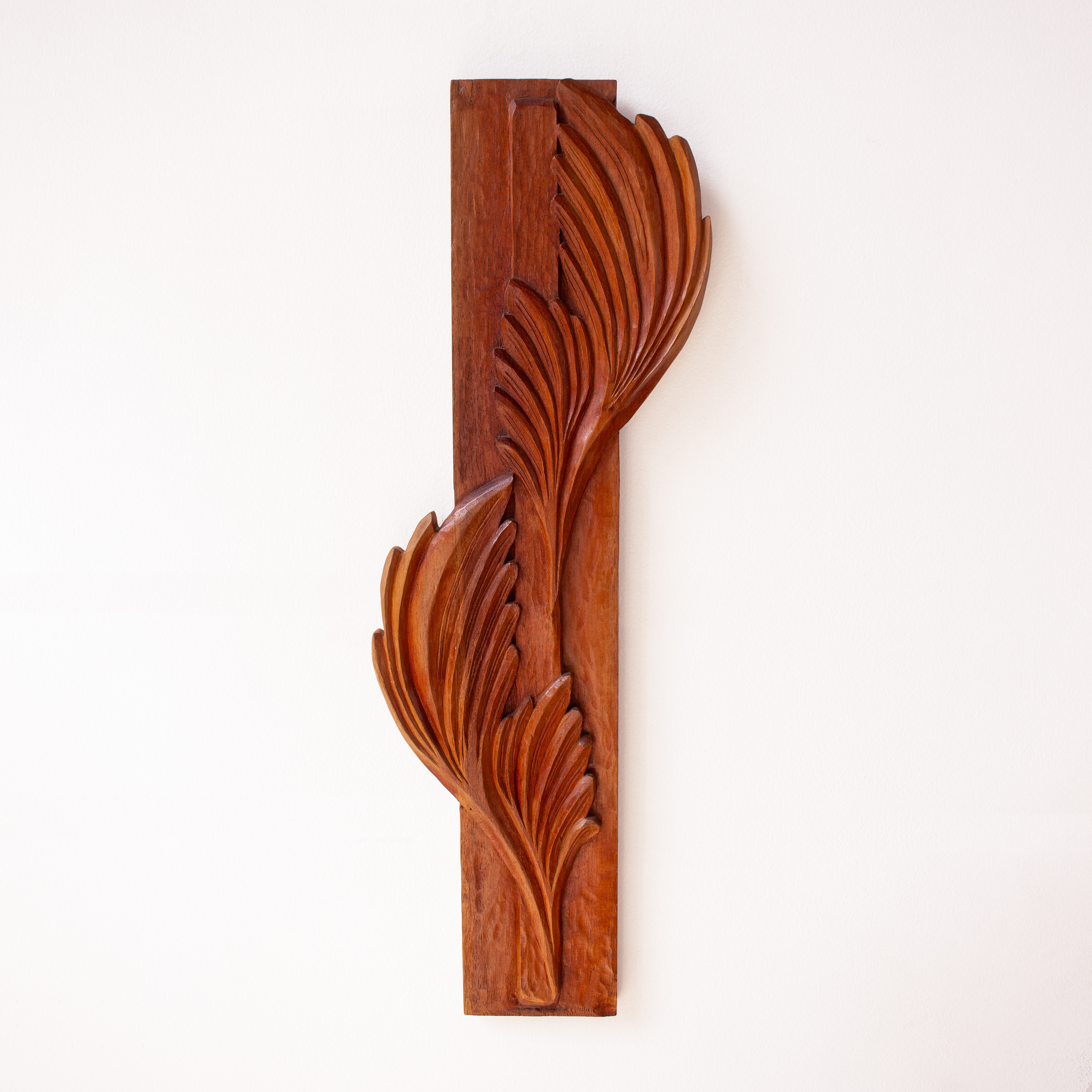
Ornamento alado, 2015
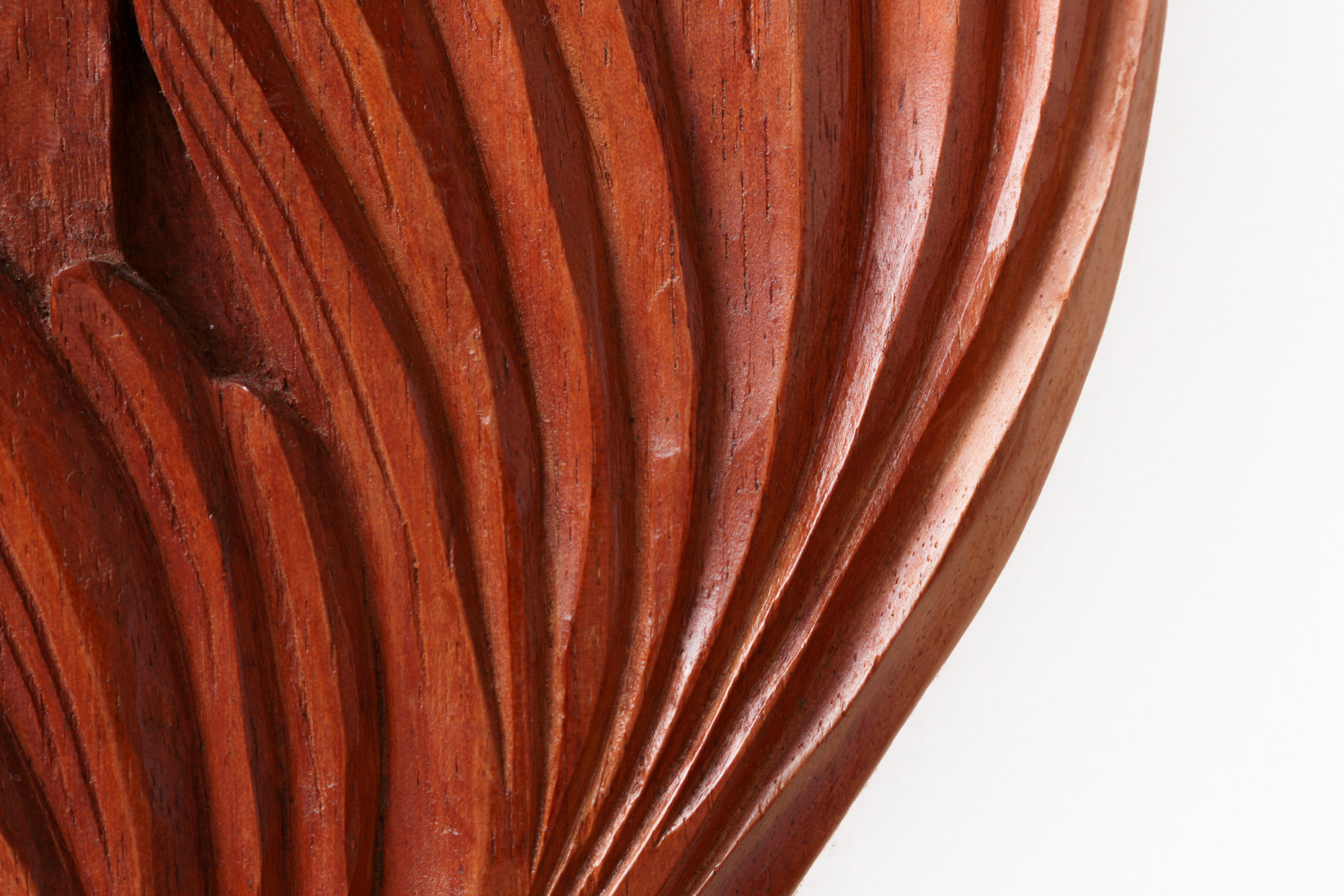
Detalle | Detail
Ornamento alado, 2015. Escultura tallada en madera de Cedro Amargo (Cedrela odorata)| Carved sculpture in Cedar wood (Cedrela odorata)
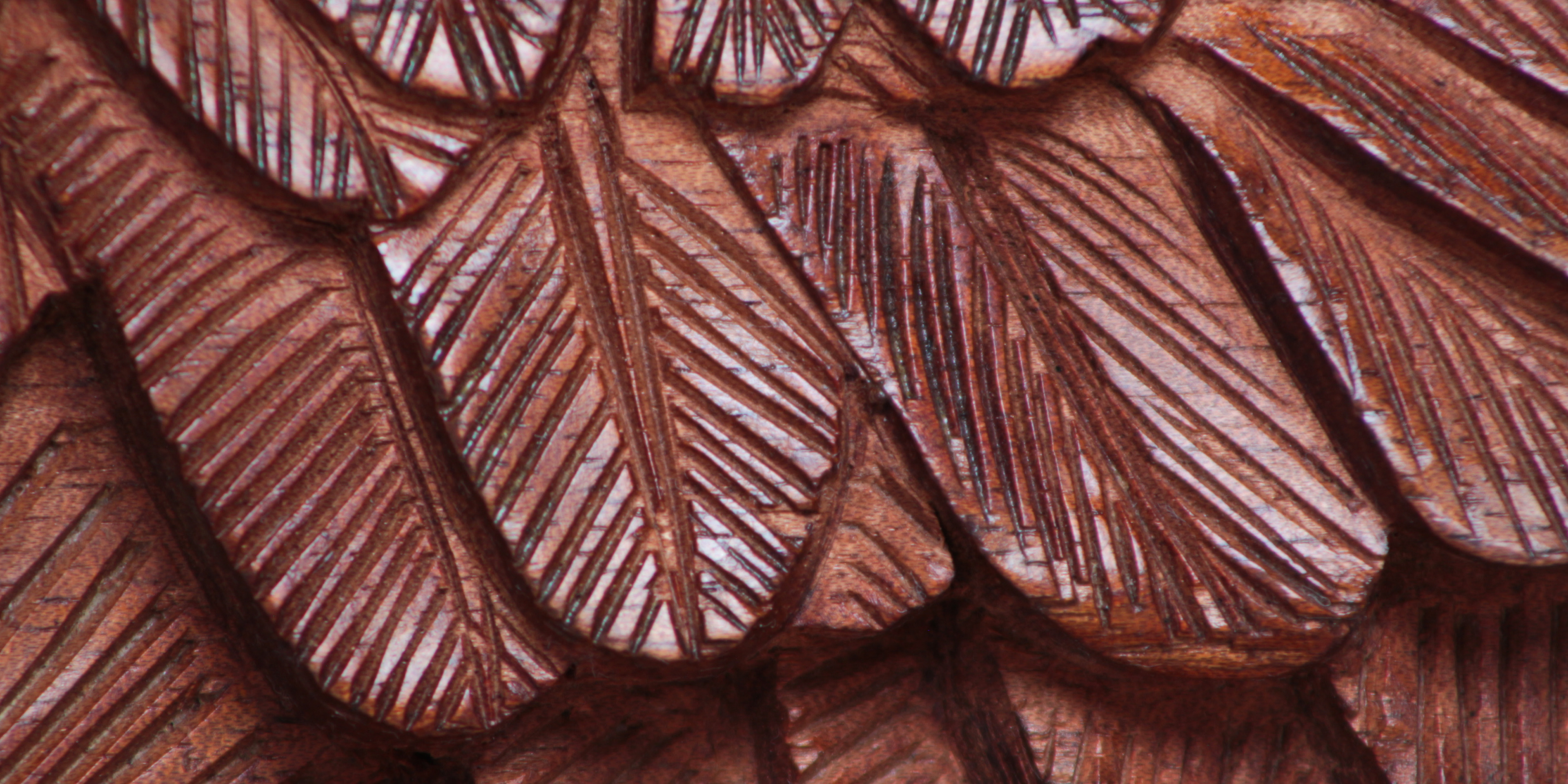
La madera excede la noción de un simple sustrato material; posee una ontología y una voz propias donde la rugosidad, el aroma y su capacidad de transmutación constituyen el mensaje mismo. La elección deliberada de una especie sobre otra, así como su proceso de transformación técnica, no son decisiones arbitrarias: son indicadores que testifican el momento histórico y social que atraviesa el material. En este sentido, la dimensión denotativa de la obra debe alinearse de manera indisoluble con su carga connotativa.
Este principio es neurálgico en mi práctica, pues mi aproximación al material elude cualquier intento de imposición formal; por el contrario, propongo un co-diseño y una negociación constante con la pieza original. El ejercicio creativo radica en aprender a descifrar la latencia de su movimiento y prever, en la medida de lo posible, un resultado que potencie el factor cronológico. Así, la madera opera como un archivo de memoria vivo e inconcluso: un testigo material que inscribe en su propia estructura las huellas del tiempo y los vestigios de una historia inaccesible, continuando su transformación de forma perenne.
Wood exceeds the notion of a mere material substrate; it possesses its own ontology and voice, wherein its roughness, aroma, and capacity for transmutation constitute the message itself. The deliberate choice of one species over another, as well as its technical transformation process, are not arbitrary decisions: they are indicators that testify to the historical and social moment that the material traverses. In this sense, the denotative dimension of the work must be indissolubly aligned with its connotative charge.
This principle is neuralgic to my practice, as my approach to the material eludes any attempt at formal imposition; on the contrary, I propose a constant co-design and negotiation with the original piece. The creative exercise lies in learning to decipher the latency of its movement and to foresee, as far as possible, an outcome that enhances the chronological factor. Thus, wood operates as a living and unfinished archive of memory: a material witness that inscribes within its own structure the traces of time and the vestiges of an inaccessible history, continuing its transformation perennially.
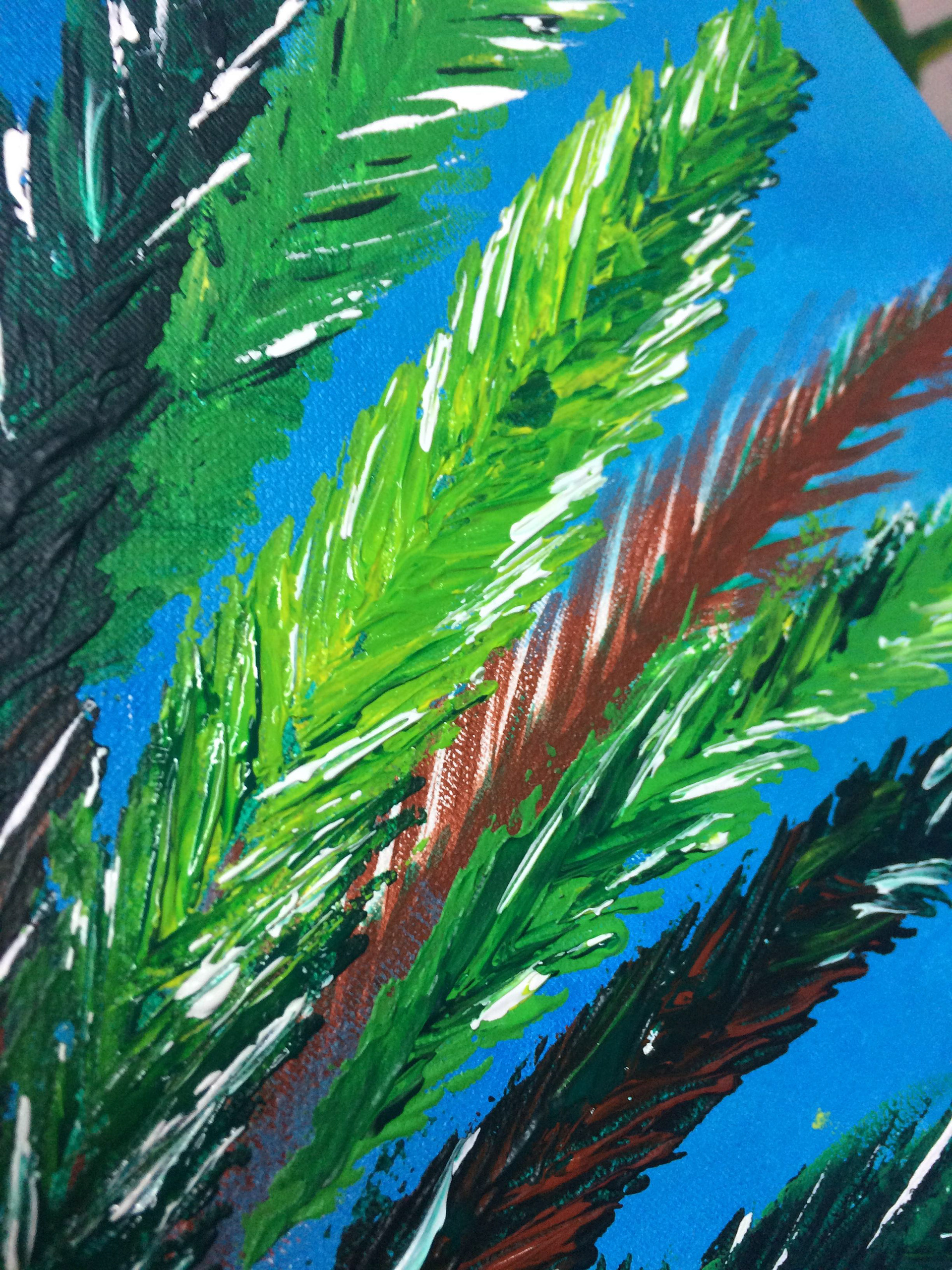
Detalle | Detail
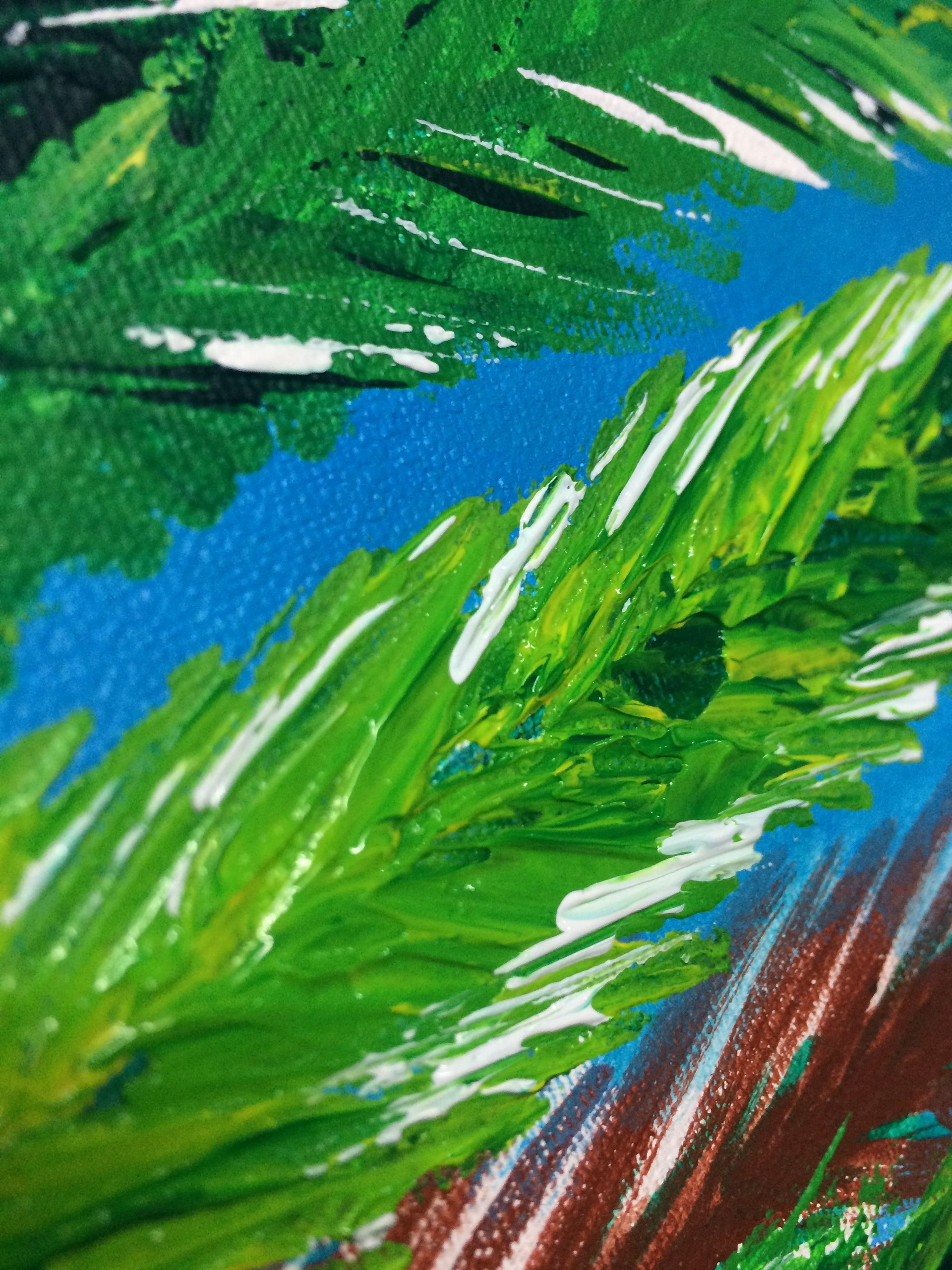
Detalle | Detail
Detalles Estudio de palma africana, 2015. Acrílico sobre lienzo| Acrylic on canvas
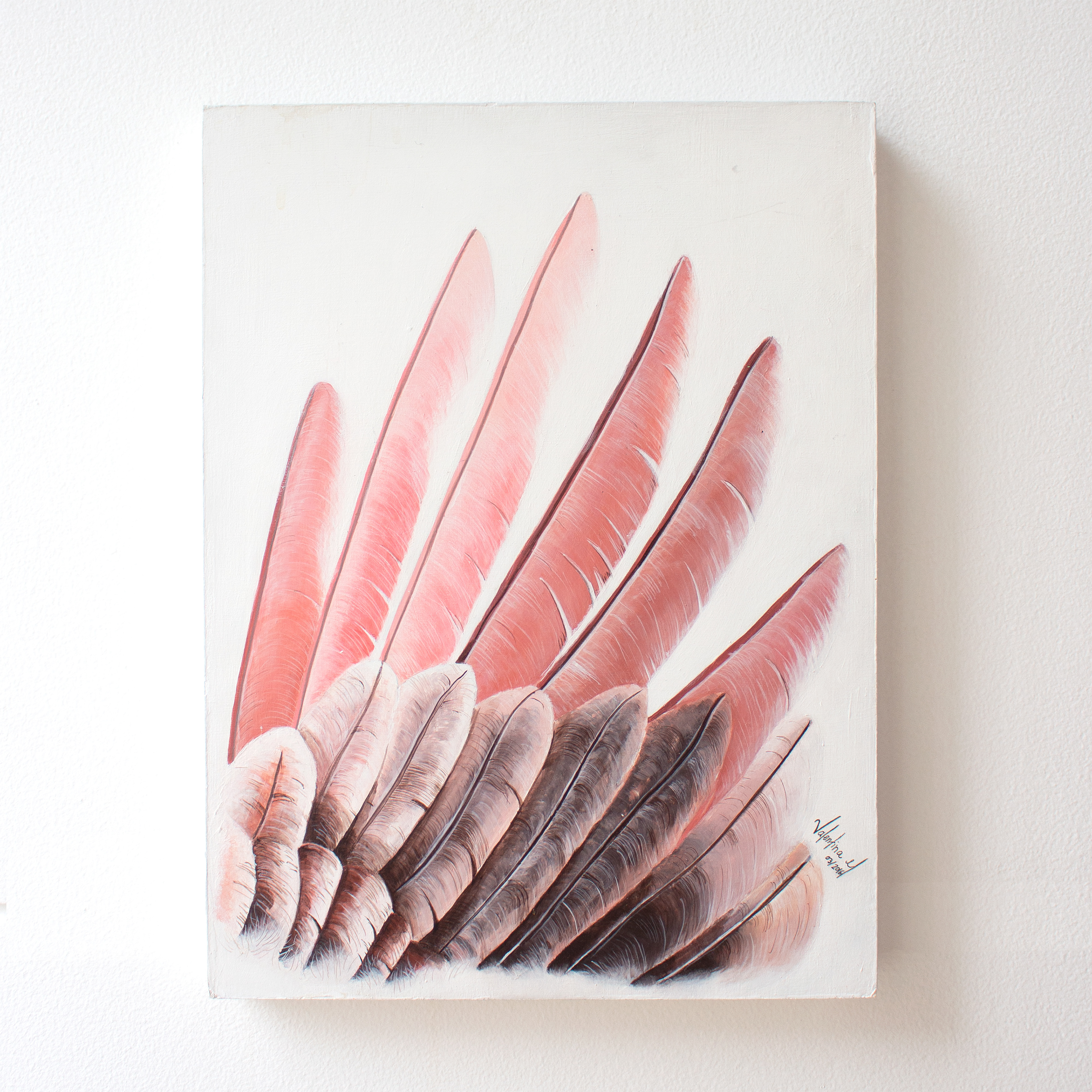
Estudio en acrílico de ala de águila, 2016
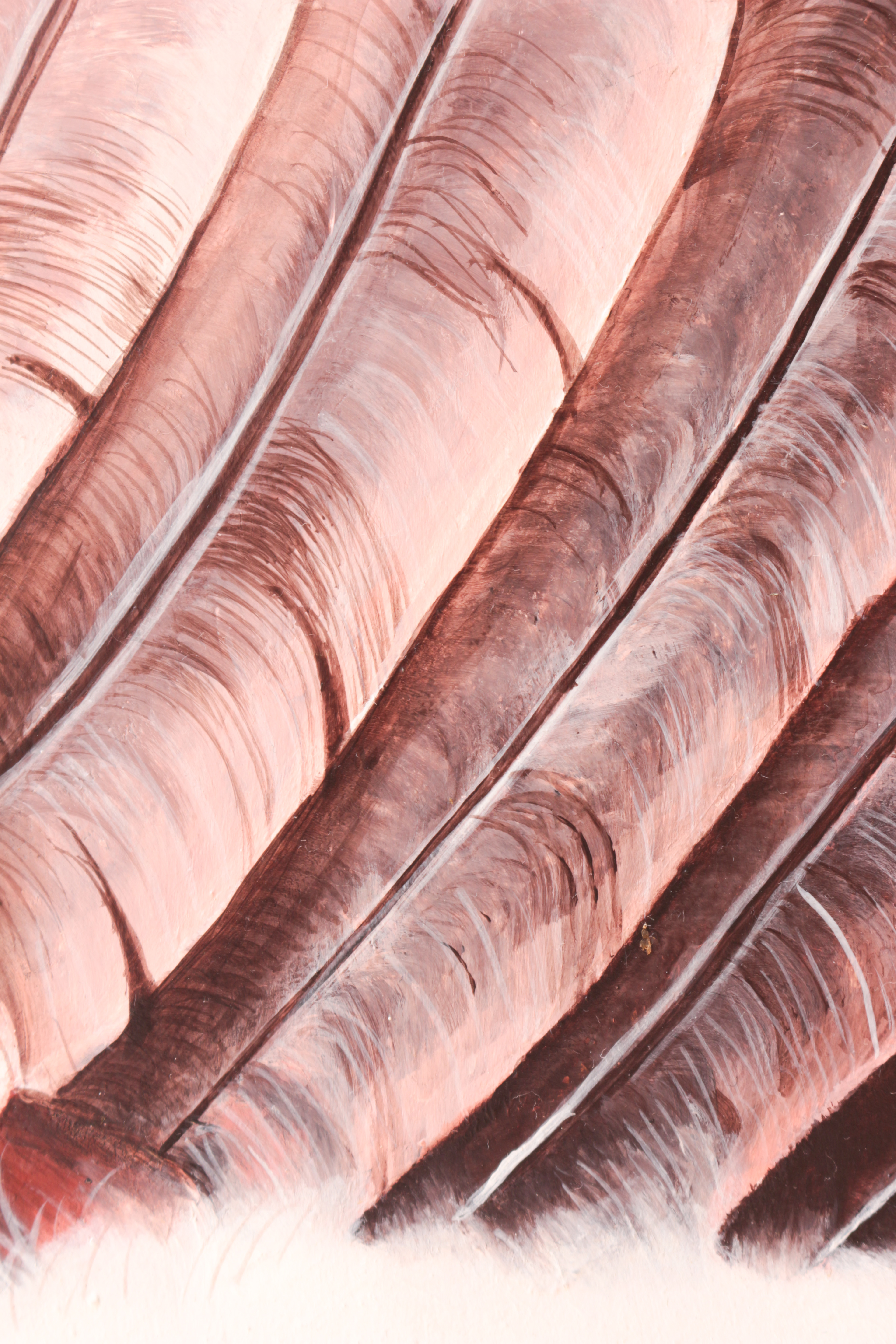
Detalle | Detail
Estudio en acrílico de ala de águila, 2016. Acrílico sobre retablo | Acrylic on wood panel